
Evidence 01
Recognise the unfinished moment
Use the call, enquiry, booking, or website journey to identify the follow-up moments that deserve a more useful response.
When someone reaches out and the next step is delayed, their question does not disappear. They may keep searching, choose a faster response, or forget why they called. A considered voice follow-up creates a more useful way to reconnect before the moment goes cold.
A missed call or incomplete enquiry sits in a queue. A callback happens later, without the reason for the original moment in view.
The signal, the reason to reconnect, and the appropriate next move are packaged into a response route your team can trust.
Use the call, enquiry, booking, or website journey to identify the follow-up moments that deserve a more useful response.
Build the timing around your business rules—so a time-sensitive enquiry is handled differently from a routine callback.
Use the available context to open a clear, useful conversation rather than asking the person to repeat why they reached out.
When a conversation needs more than an initial response, the right person receives the summary and the next action without losing the thread.
A missed call, incomplete booking, open enquiry, or rule you have defined creates a moment for the response flow to assess.
The route considers the available details, the time sensitivity, and the customer journey already in progress.
The system offers the appropriate next move: a short callback, clarification, booking path, or human handoff.
The resulting conversation, summary, and next action move into the workflow your team already uses.
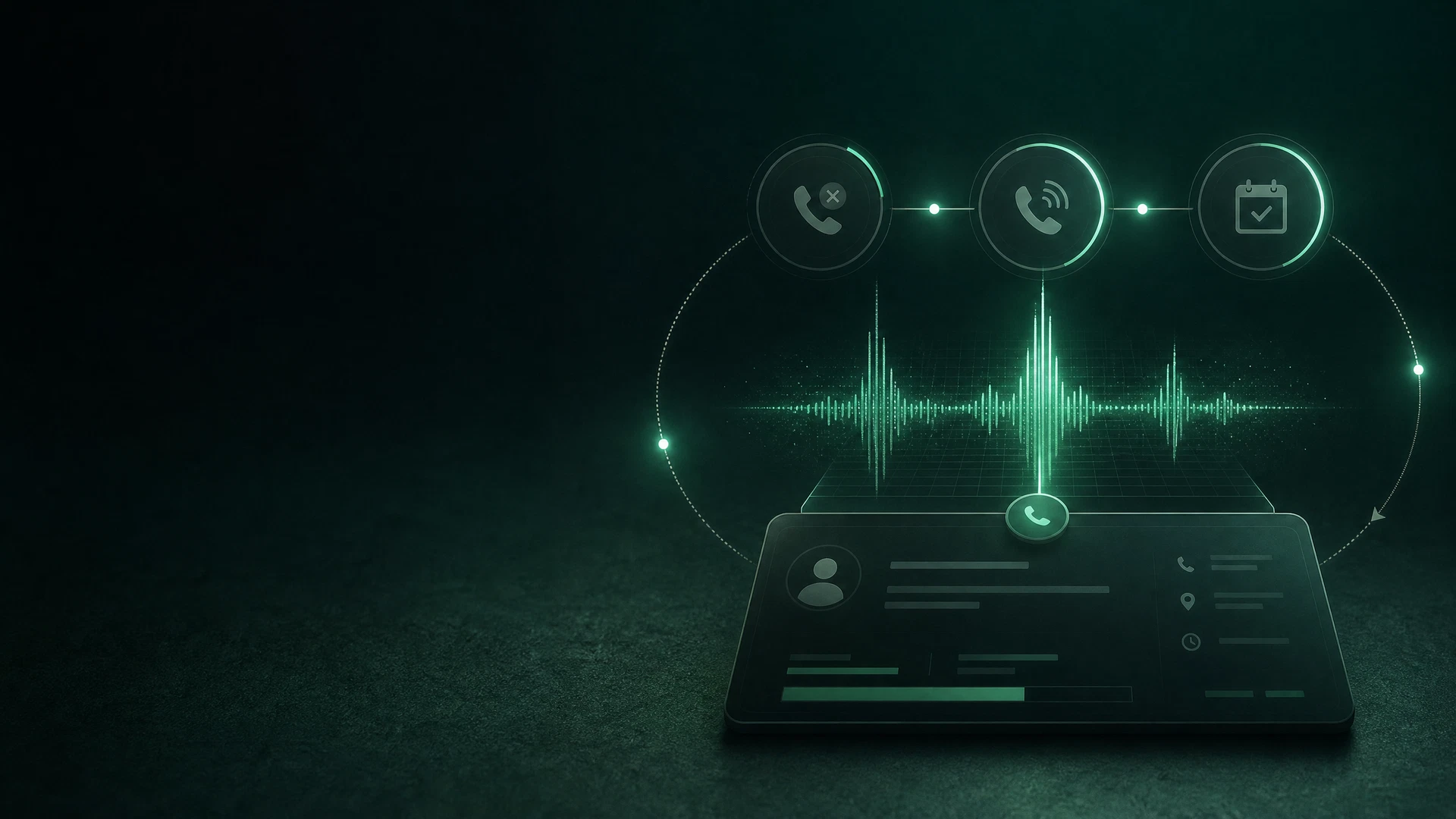
This example shows how a missed inbound call can be returned with enough context to feel helpful, without creating a second disconnected workstream for the team.
A caller reaches the business during a busy period after reviewing a service page and does not leave a voicemail.
Signal
The response route sees the missed moment alongside the caller’s recent context and the rules set for that call type.
Context
The system frames a useful first reconnection around the service enquiry, availability question, or booking route already in view.
Voice
The caller can receive a timely callback, a booking option, or a human route depending on what the conversation needs.
Outcome
The follow-up result and recommended action move into the team workflow so no promising call is left without a visible owner.
Explore the short voice reconnection a missed caller could receive, then use the booking view to see how a callback can become a clear calendar commitment with the original context preserved.
This is an interactive illustration of the response path—not a live call or calendar.
The point is not to call everyone with the same script. The point is to make a useful reconnection available where timing and context can genuinely move the conversation forward.
Create a clear callback route when a caller could not reach the business at the moment they needed to.
Offer a helpful route back to the scheduling conversation when a person stops before a booking is finished.
Reconnect around the question, service, or decision point that created the original enquiry.
Respect the customer’s chosen timing and route the follow-up with the context that makes it useful.
Integ Digital Media maps the signals that should create a follow-up, the timing that makes sense for each one, the questions that should be handled first, and the moments that should go directly to a person. The objective is a consistent response path—not a volume-first calling machine.
Typical configurations can connect inbound call outcomes, calendar availability, CRM activity, and AI voice workflows through the tools your team already uses.
Give the team a structured way to recover missed moments without asking people to work through an unprioritised callback list.
Reconnect with callers who were close to booking and help them find the appropriate route back to the calendar.
Use the original enquiry and journey context to make the next voice conversation warmer and more focused.
No. The implementation starts with the follow-up moments you choose. Different call types, schedules, and customer contexts can be routed differently.
Yes. The workflow can include human handoff rules, team alerts, summaries, and clear next actions when a person should own the conversation.
Timing is designed around your customer journey and operational rules. The planning session identifies where a timely response creates value and where a different route is more appropriate.
The response path is designed to carry the outcome into the systems and workflows your team already uses, rather than creating an isolated list of interactions.